













Why Sudoku Is Perfect for Seniors
Sudoku puzzles are widely enjoyed by seniors because they provide a gentle but engaging form of mental exercise. Unlike many games that rely on speed or memory recall, Sudoku focuses on logical thinking and simple number patterns. This makes it easy to understand while still offering meaningful mental stimulation.
Solving Sudoku regularly can help maintain concentration and encourage structured thinking. Each puzzle asks the player to analyze rows, columns, and small grid sections in order to determine where numbers belong. This process trains the brain to recognize patterns and evaluate possibilities step by step.
Gentle Brain Training
Many seniors enjoy Sudoku as part of a daily brain training routine. The puzzles provide just enough challenge to keep the mind active while remaining calm and relaxing to solve. Because the rules are simple and the numbers repeat across the grid, players can focus on logical reasoning instead of learning complex instructions.
Improves Focus and Concentration
Sudoku encourages careful observation and attention to detail. When solving a puzzle, players must check each row, column, and box to avoid repeating numbers. This type of structured thinking helps strengthen focus and encourages a thoughtful approach to problem solving.
A Relaxing Daily Activity
For many seniors, Sudoku becomes a peaceful daily activity. A puzzle can be solved in the morning with coffee, during a quiet afternoon break, or in the evening as a relaxing mental exercise. Because Sudoku puzzles can be solved at any pace, they provide a comfortable way to stay mentally engaged without pressure or stress.
Large Print Sudoku Puzzles for Seniors
One of the most important factors when creating Sudoku puzzles for seniors is readability. Large print Sudoku puzzles use bigger numbers, wider grid spacing, and clear puzzle layouts that make solving more comfortable. These adjustments help reduce eye strain and allow players to focus on the logic of the puzzle rather than struggling to read small numbers.
Traditional Sudoku books often place many puzzles on a single page, which can make the grids appear small and difficult to read. Large print Sudoku layouts solve this problem by increasing cell size and spacing, making each puzzle easier to see and solve. This is why large print Sudoku books are especially popular among seniors who prefer a clear and comfortable puzzle experience.
Why Large Print Sudoku Is Easier to Solve
Larger Sudoku grids allow players to write numbers clearly and review the puzzle without visual strain. With more space in each cell, it becomes easier to test possibilities and track progress while solving the puzzle. This simple improvement can make Sudoku much more enjoyable, especially for players who prefer relaxed puzzle solving sessions.
Comfortable Puzzle Layouts
Large print Sudoku pages often contain fewer puzzles per page so that each grid remains clear and easy to read. Many puzzle books designed for seniors use spacious layouts, large numbers, and clean puzzle formatting. These layouts make Sudoku solving more comfortable and encourage longer puzzle sessions without causing visual fatigue.
Printable Sudoku Puzzles for Seniors
Printable Sudoku puzzles are one of the most convenient ways for seniors to enjoy this classic logic game. Instead of solving puzzles on a small screen, printable Sudoku pages allow players to work with a comfortable paper format that is easy to read and simple to use. Many people prefer solving puzzles with a pencil and paper because it makes it easier to write notes, test numbers, and review possible solutions.
Printable Sudoku sheets can be used at home, during travel, or as part of a daily brain exercise routine. Because each puzzle is presented on a clear page, players can focus on the logic of the game without distractions. This format is especially helpful for seniors who prefer large, readable puzzles that can be solved at their own pace.
Daily Sudoku Practice
Many seniors enjoy solving one or two Sudoku puzzles each day as a regular mental activity. Printable puzzle pages make it easy to keep a small stack of puzzles ready for a relaxing break or a quiet moment during the day. Over time, this simple routine can help maintain focus, strengthen logical thinking, and provide a rewarding sense of accomplishment.
Sudoku in Community Activities
Sudoku puzzles are also popular in retirement communities, activity groups, and educational programs designed for seniors. Printable Sudoku worksheets allow organizers to prepare puzzle sessions where participants can solve puzzles individually or together. Because Sudoku rules are simple and easy to learn, the game works well as a shared activity that encourages mental engagement and friendly interaction.
Creating Sudoku Puzzle Books for Seniors
Sudoku puzzle books designed for seniors are very popular because they provide a relaxing and structured way to enjoy logic puzzles. Many puzzle collections focus on easy or medium difficulty levels combined with large and comfortable puzzle layouts. These books allow players to solve puzzles at their own pace while enjoying a clear and readable page design.
Large print Sudoku books are especially helpful for seniors because they make puzzles easier to read and write in. With larger cells and wider spacing, players can comfortably fill in numbers without visual strain. This is why many puzzle books created for seniors use spacious layouts and fewer puzzles per page.
Why Sudoku Puzzle Books Are Popular
Sudoku books remain one of the most widely enjoyed puzzle formats. Unlike digital games, printed puzzle books allow players to solve puzzles anywhere without needing a device or internet connection. Many people enjoy working through a puzzle book gradually, solving a few puzzles each day as part of a relaxing routine.
Generating Sudoku Books Easily
Modern Sudoku generators make it possible to create entire puzzle books quickly. Instead of designing every puzzle manually, creators can generate large sets of Sudoku puzzles with consistent layouts and difficulty levels. This makes it easy to prepare printable puzzle collections, organize solution pages, and build complete Sudoku books suitable for large print formats or activity collections for seniors.
Best Sudoku Difficulty Levels for Seniors
Choosing the right Sudoku difficulty level is important for maintaining a relaxing and enjoyable puzzle experience. Seniors often prefer puzzles that provide a clear logical challenge without becoming overly complex. Starting with easier puzzles and gradually moving to slightly harder ones allows players to build confidence while keeping the solving process comfortable and engaging.
Sudoku generators make it easy to adjust puzzle difficulty. By selecting different difficulty levels, players can create puzzles that match their preferred solving style — whether they enjoy quick and relaxing puzzles or more thoughtful logic challenges.
Easy Sudoku
Easy Sudoku puzzles are often the best starting point for seniors. These puzzles usually contain more given numbers, which makes it easier to identify patterns and place the missing digits. Easy puzzles are perfect for relaxed solving sessions and daily brain training routines.
Medium Sudoku
Medium difficulty puzzles introduce a slightly deeper logical challenge. They require more careful observation and may involve multiple steps before a number can be placed correctly. Many experienced Sudoku players enjoy medium puzzles because they provide a balanced mix of challenge and satisfaction.
Adjustable Difficulty
With a Sudoku generator, difficulty levels can be adjusted instantly. This flexibility allows players to create puzzles that match their preferred level of challenge. Whether solving easy puzzles for relaxation or medium puzzles for a deeper mental workout, adjustable difficulty helps ensure that Sudoku remains enjoyable and accessible.
Example of a Sudoku Puzzle for Seniors
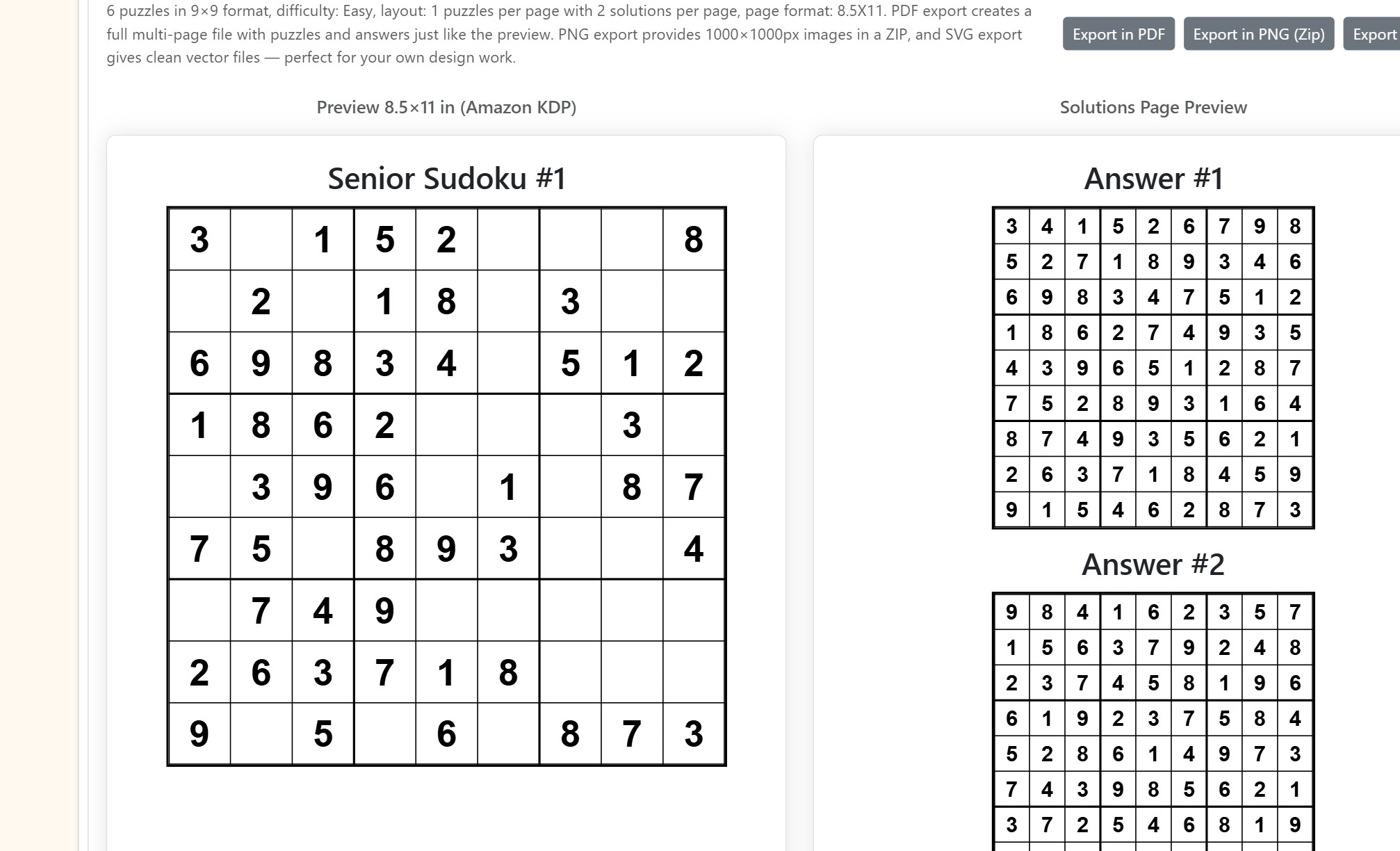
Large print Sudoku puzzles use bigger grids and clear spacing to make solving more comfortable.
Seeing a real Sudoku puzzle example can help new players understand how the game works. In a standard Sudoku puzzle, numbers must be placed so that each row, column, and smaller grid contains every number exactly once. The puzzle begins with some numbers already filled in, and the player must logically determine where the remaining numbers belong.
Sudoku puzzles designed for seniors often use larger grids and clearer layouts. These adjustments make it easier to read the puzzle and write numbers inside the cells. Larger puzzle cells also give players more space to test possible numbers while solving.
Once players become comfortable with the puzzle format, they can solve Sudoku puzzles regularly as a relaxing mental exercise. With printable Sudoku pages and adjustable difficulty levels, it is easy to create puzzles that match different preferences and solving styles.
Simple Sudoku Tips for Seniors
Sudoku puzzles follow simple rules, but solving them becomes easier with a few helpful strategies. Many experienced players use small logical techniques that make it easier to analyze the grid and determine where numbers belong. These tips can help beginners and seniors enjoy Sudoku puzzles with greater confidence.
The key to solving Sudoku comfortably is patience and observation. Instead of rushing, it is helpful to scan the grid carefully and look for numbers that can only fit in one specific place. Over time, these patterns become easier to recognize.
Start With Easy Puzzles
Beginning with easy Sudoku puzzles is the best way to learn the game. Easy puzzles contain more given numbers, which makes it easier to see patterns and place missing digits. As confidence grows, players can move on to medium puzzles for a slightly deeper challenge.
Look for Obvious Numbers
A useful technique is to scan each row, column, and box to see which numbers are already present. If only one number is missing from a row or column, it becomes easier to determine where that number must go. This step-by-step approach helps avoid mistakes and keeps the puzzle solving process clear.
Take Your Time
Sudoku puzzles are meant to be relaxing. There is no need to rush through a puzzle. Taking time to observe the grid and think about each move makes the experience more enjoyable and helps develop stronger logical thinking skills over time.